

What is Skimo?
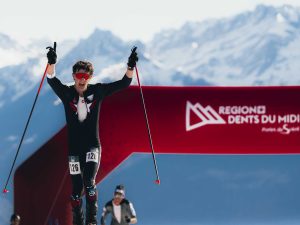 Ski mountaineering (“Skimo”), the newest Olympic sport in 2026, combines the best of Nordic and Alpine racing. Skiers race uphill and down, requiring endurance, strength, and skill.
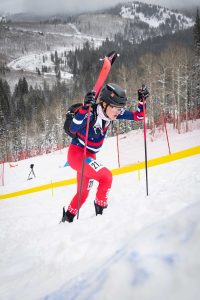
Specialized equipment enables racers to “run” uphill with lightweight skis and skins on their feet, transition in seconds to bootpacking, and then transition again to downhill skiing.
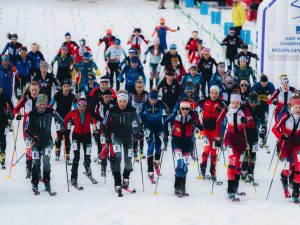
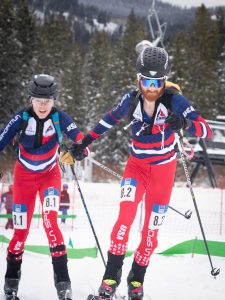
Skimo races include multiple disciplines that involve different skillsets. Individual races are historically the most popular in Europe and the United States, and involve longer-distance (usually 1.5+ hour) endurance events that traverse up and down mountain terrain. Relay races and Team events involve teams of 2 or more racers competing either in sequence or in parallel. Sprint races are short, 3-minute events that combine uphill, transition, and downhill skill in an intense anaerobic effort. Vertical races are simply a race from the bottom to top of the mountain with no transitions or descents.
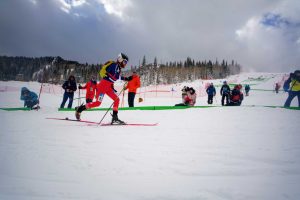 Sanctioned skimo races in the United States abide by a series of rules, by discipline, as directed by the International Ski Mountaineering Federation (ISMF). The United States Ski Mountaineering Association (USA Skimo) is recognized by the ISMF as the national sport organization for the United States. The sport of skimo will debut at the Milano Cortina 2026 Winter Olympics with the Sprint and Mixed Relay disciplines.
Skimo racing is a welcoming sport to all participants with recreational and competitive events held throughout the United States.
USA Skimo has enclosed the following guide to help you better understand the sport. At any time, please reach out to us for any questions about skimo.
Athlete Categories
- U14 – (Ages 14 and under) Shortened race course.
- U16 – (Ages 15-16) Shortened race course.
- U18 – (Ages 17-18) Shortened race course.
- U20 – (Ages 19-20) Full distance race course.
- Senior – (Ages 21-44) Full distance race course.
- Masters – (Ages 45-54) Full distance race course.
- Super Masters – (Ages 55+) Full distance race course.
- Recreation – Reduced distance/vert category.
Types of Race Disciplines
Skimo Equipment & Gear
Race Category: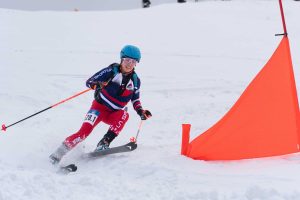
- For complete specification see https://www.usaskimo.org/mandatory-gear/
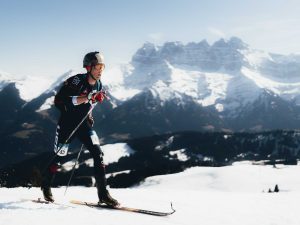
- Skis – Minimum length: women = 150cm, men = 160cm. Minimum combined weight ski + binding: women = 730g, men = 780g (no split boards or snowshoes unless specified by race)
- Bindings – Toe and heel piece must be same brand. Must have both lateral and forward release functions
- Boots – Rubber sole must cover 100% of boot bottom. Minimum weight: women = 450g, men = 500g
- Poles – Of maximum diameter 25mm, and with non-metallic baskets
- Climbing Skins – At least 1 pair, must cover at least 50% of the surface area of the ski and 50% of the length of the ski
- Helmet – Dual certified for skiing (EN 1077) and climbing (UIAA 106 or climbing EN 12492).
- Beacon – Must transmit on 457 kHz, with three search antennas
- Shovel – Must have separate blade and shaft with handle, i.e,. no snow claws. Minimum total length 50 cm
- Probe – Must be a dedicated sectional probe, i.e., no probe poles. Minimum 240cm
- Gloves – Must cover the entire hand up to the wrist – to be worn the duration of the race
- Pack – Must have sufficient carrying capacity to hold all of the equipment required by the regulations, with two rear and/or lateral fastening straps for carrying skis
- Eye Protection – goggles, helmet shield or sunglasses
- 3 Upper Body Layers
- Base layer
- Outer layer with long sleeves. Sleeves must cover the elbows at all times
- Long-sleeved windproof top – may be carried in the backpack
- 2 Lower Body Layers
- Outer layer – ski pants or ski suit covering the entire length of the legs
- Windproof pants – may be carried in the backpack
- Whistle
- Survival blanket
- ID or copy of ID
Recreation Category:
- Touring skis, telemark or split boards (no snowshoes unless specified by race)
- Touring Bindings
- Poles
- Climbing Skins
- Helmet
- Gloves
- Hydration – bottle or bladder
- Eye Protection – goggles, helmet shield or sunglasses
- Upper Body Layer – windproof
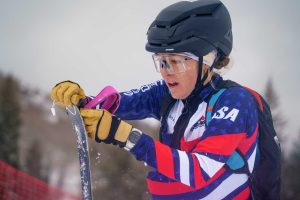 Our recommendation is to either rent demo gear or start with the backcountry ski gear you currently own, and, if available, enter the heavy metal or recreational division. When you are ready for competitive skimo, you can opt for lighter and faster equipment.
When the time comes to investing in some specialized gear, we recommend speaking with a qualified skimo gear provider like Cripple Creek Backcountry, Skimo.co or your local backcountry ski shop about your preferences, expectations and budget. Our partner at SkinTrack.com has put together a brief overview regarding a gear guide to your first skimo race . USA Skimo members can also receive discounts at select retailers.
Articles About Getting Started In Skimo Racing
http://mountainlessons.com/skiing/start-skimo-racing-8-tips-wish-id-known
Gear Guide To Your First Skimo Racing Setup: Skis, Boots, Bindings, and more
https://www.skimag.com/adventure/the-sport-of-skimo-an-introduction/
How To Improve
The program structure has been developed by USA Skimo and will be run by athlete selected ‘Chairs’ who will coordinate and facilitate periodic meetings, presentations, and seminars to make the program what the members would like it to be. Example content: transition skills, race tactics, race rules & regulations, equipment reviews, nutrition, anti doping, etc. USA Skimo will assist and support the Chairs and be a resource as needed. Learn More.
Where To Train
Ready To Race?
Find Local & National Races
A skimo race is an incredibly exciting and rewarding experience.
Recreational and competitive events are held throughout the United States. We hope you’ll visit our race and event schedule to find a skimo event of interest near you.
Race Internationally
Ready to race against the best competition in the world?
USA Skimo provides resources and national team positions to support representation on the world’s stage. Additionally USA Skimo will be hosting the North American Championships and future World Cup events. Learn more about qualifying for the National Team.